



Epiretinal Membrane vitrectomy
Epiretinal Membrane Vitrectomy in Texas
Vitrectomy for Epiretinal Membrane
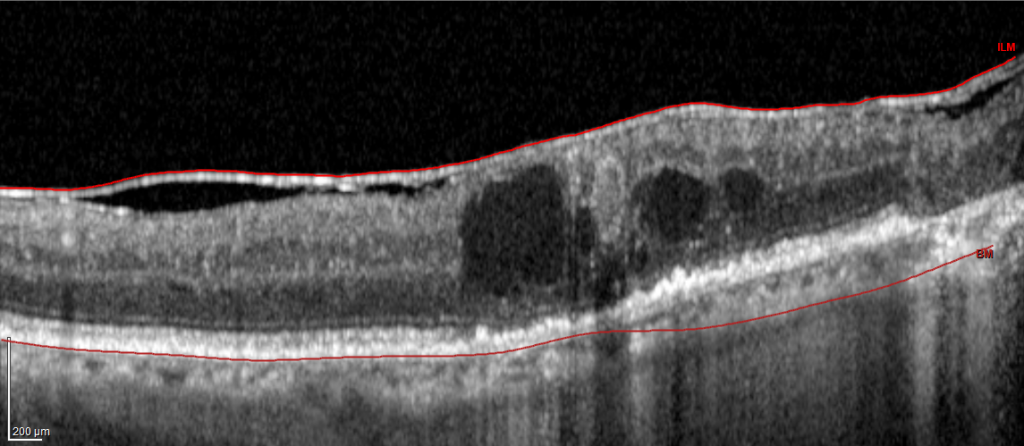
An epiretinal membrane (ERM) or macular pucker is a thin layer of scar tissue that grows on the retina’s surface, especially over the macula—the part of the retina that provides clear, center vision. The membrane contracts, and this can cause wrinkling of the retina, resulting in blurred or distorted vision that can’t be rectified with glasses alone. At Texoma Retina, our fellowship-trained retina specialists use cutting-edge microsurgical techniques to fix the structure of the retina and improve vision during epiretinal membrane vitrectomy in Texas.
People who want to have a vitrectomy for an epiretinal membrane can get personalized care with the help of modern technology. We are a retina specialist serving Southern Oklahoma, including those coming in from a short drive from Durant, and we are glad to assist patients from Sherman, Allen, McKinney, Gainesville, and North Texas.
What Is an Epiretinal Membrane?
An epiretinal membrane is a scar tissue membrane that grows on the surface of the retina. Some cases are minor, while others slowly constrict and tug on the retina, distorting vision.
Common symptoms of include:
- Central vision blurred
- Straight lines seem curved or wavy
- Difficulty reading or recognising people’s faces
- images
- Having trouble driving and doing other small jobs
The retinal deformation may worsen throughout the years with the contraction of the membrane. The usual surgical treatment for clinically significant instances is epiretinal membrane surgery with vitrectomy and membrane peeling.
When Is Vitrectomy Needed?
Not every epiretinal membrane needs surgery. Mild cases might just be watched during routine eye exams.
If you are suffering, your retina specialist may recommend macular pucker surgery:
- Moderate-to-severe vision impairment
- Blurry or distorted eyesight that lasts and impacts daily life
- Progressive retinal wrinkling
- Failure of observation or conservative management
Glasses cannot correct for the retinal deformation caused by an ERM, and so surgery is frequently the best option when symptoms become troublesome.
How Is Epiretinal Membrane Vitrectomy Performed?
The goal of the delicate outpatient microsurgical operation called vitrectomy for epiretinal membrane is to remove the scar tissue that distorts the retina.
The technique usually comprises:
- Monitored sedation with local anesthesia for patient comfort
- Three tiny incisions through pars plana
- Removal of the vitreous gel with a vitrector
- Separation of posterior hyaloid to fully expose the macula
- Injection of a specific dye like Brilliant Blue to better visualize the membrane
- Careful dissection of the epiretinal membrane with fine microsurgical forceps
- Internal limiting membrane (ILM) peeling when indicated to lower the risk of recurrence
- Balanced salt solution instilled inside the eye Fluid-air exchange is optional. Gas tamponade is rarely needed until issues emerge.
- Taking out the surgical ports and applying a temporary patch over the eye
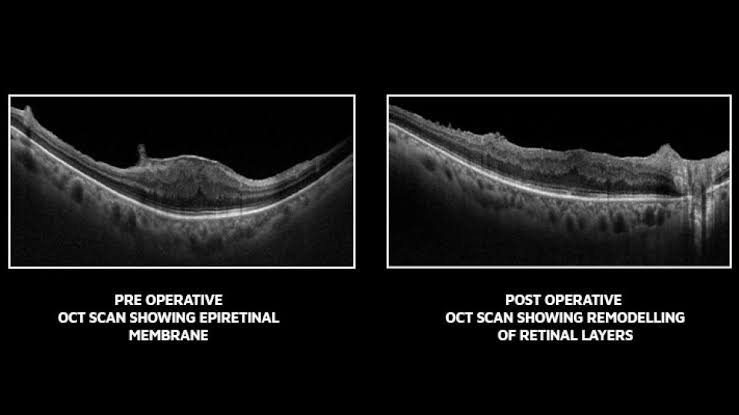
The purpose of this highly specialized surgery to peel the macular membrane is to flatten the retina, decrease distortion, and improve central vision.
Benefits and Anticipated Benefits
The purpose of the Retina Wrinkle Surgery is to obtain a smoother retinal surface and a better visual quality.
Benefits could include:
- Less visual distortion
- Enhanced clarity of central vision
- Better ability to read and drive
- Improved depth vision
- Stabilization of progressive retinal alterations
After an epiretinal membrane vitrectomy in Texas, about 80% to 90% of patients have better or stable eyesight. Vision may continue to improve slowly over several months as the retina repairs.
Recovery After Surgery
Recovery from epiretinal membrane surgery is usually easy; however, healing is different for everyone.
Patients may expect:
- Mild discomfort over the first few days
- Initial blurred vision
- Gradual eyesight improvement over weeks to months
- Regular follow-up appointments for retinal healing
- Temporary activity limits as recommended by the surgeon
Most patients resume their normal daily activities after the retina specialist feels recovery has occurred.
Safety and Risks
Vitrectomy and membrane peeling are safe and effective procedures in the hands of experienced retina surgeons.
The possible dangers include:
- Cataract formation
- Retinal tear or detachment
- Mild bleeding
- Infection
- Inflammation
Serious problems are fortunately rare, and diligent monitoring in the postoperative period can help to guarantee the best possible outcome.
Expert Epiretinal Membrane Surgery at Texoma Retina
Texoma Retina does advanced epiretinal membrane vitrectomy in Sherman, Allen, Gainesville, McKinney, and other North Texas cities and towns nearby. Our fellowship-trained retina specialists employ the newest surgical procedures to address complex macular and retinal disorders.
We also offer epiretinal membrane surgery in Southern Oklahoma and are a trusted retina specialist near Durant Oklahoma, with patients from throughout Southern Oklahoma, including those making the short commute from Durant, Oklahoma. If you are in need of epiretinal membrane vitrectomy in Texas, macular pucker surgery in Texas, or macular membrane peel surgery, we are here to preserve and restore your eyesight.
If poor vision is impacting your quality of life, surgical assessment may help. Epiretinal membrane surgery is quite beneficial in well-selected patients. To find out more about your treatment choices and if vitrectomy for epiretinal membrane is correct for you, schedule a consultation with Texoma Retina.
Frequently Asked Questions
An epiretinal membrane is a thin layer of scar tissue that develops on the surface of the retina over the macula. As it shrinks, it can cause the retina to wrinkle and lead to hazy or distorted central vision.
Macular pucker is generally caused by the natural separation of the vitreous from the retina as we age. It can also happen after retinal tears, eye inflammation, diabetic eye illness, or previous eye surgery.
Common symptoms include blurred central vision, straight lines appearing wavy or bent, difficulty reading, images appearing distorted, and reduced ability to do detailed visual tasks.
Surgery is suggested when blurred or distorted vision makes daily tasks very hard or when the membrane keeps contracting and making the distortion worse even after being watched.
Request an
Appointment
LET’S GET STARTED
Stay up to date on solutions and news
Opening Hours
Calls are taken 24/7 for emergencies
Available on Saturday and Sunday for Emergency only. Call for appointment
LOCATIONS AND DIRECTIONS